
The affordability of renting a one-bedroom apartment alone in a major U.S. city depends heavily on location, income, and local rent levels.
A common affordability rule says rent should not take up more than 30% of gross income. Housing costs above that level can put pressure on groceries, transportation, savings, debt payments, and other basic needs.
Severe rent stress begins when housing costs take more than 50% of income. At that point, renters may have little room left for emergencies or long-term financial planning.
For single renters, a one-bedroom apartment can be especially difficult because one person carries the full rent alone. A couple can split rent across two incomes, but a single renter has no second paycheck to soften the cost. Affordability varies sharply by city.
Many coastal metros price out single renters, while some midsize and inland cities still offer realistic options.
National Rental Affordability Problem
Right now 44 million renters in America are paying rent every month.
And getting absolutely nothing back.
Zero. Zip. Nada.$MPP changes that completely.
✅ Up to $100 back on any existing rent & mortgage ✅ Up to $800 back on Max Reward PropertiesSame payment. Completely… pic.twitter.com/zl46D38E44
— MegPrimePay (@MegPrimePay) May 12, 2026
Across the United States, renting already creates major financial pressure for millions of households.
About 44.1 million American households rent their homes, and renters pay about $485 billion in rent nationwide each year.
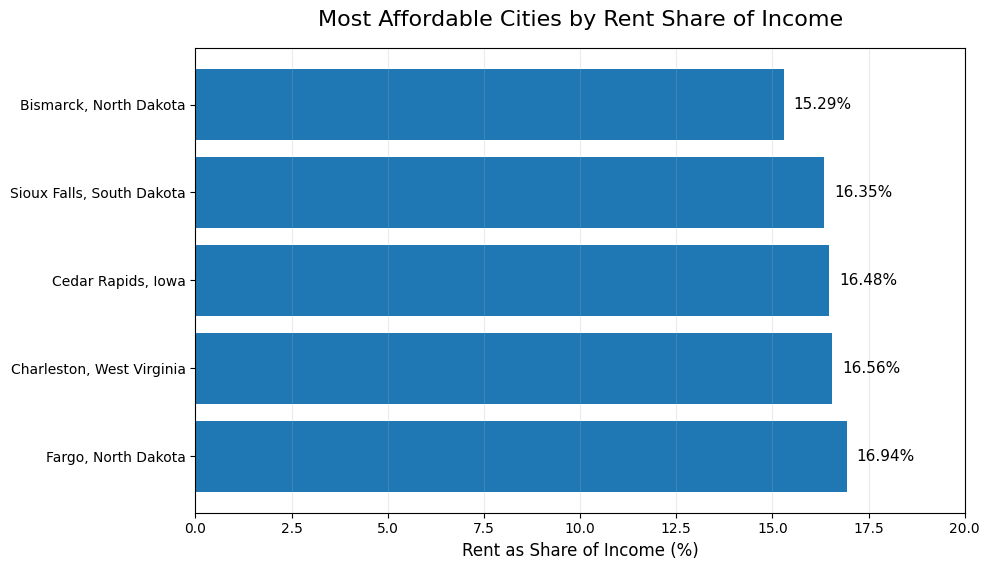
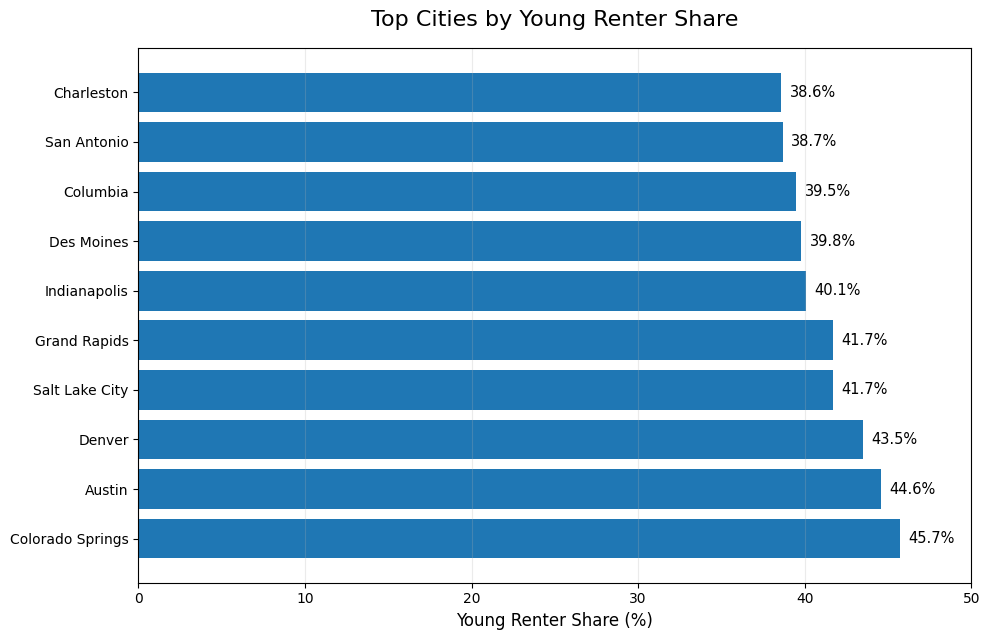
That 29.1% figure puts many renters very close to the 30% affordability line before adding utilities, insurance, deposits, moving costs, parking, or other housing expenses. Recent rent pressure adds to that burden. National average apartment rent reached $1,713 in 2024. Among the 100 largest U.S. cities, 91 saw rent increases over the prior year. Rent inflation also outpaced general currency inflation by 40.7% between 2013 and 2023. Single renters face added pressure because every recurring cost falls on one income. Rent, utilities, deposits, renters insurance, transportation, groceries, and savings all compete for the same paycheck. For example, a renter earning $5,000 per month before taxes would have an affordable rent limit of $1,500 per month. One-bedroom apartments often fail that test for single renters in expensive cities. A unit that may be manageable for two earners can become unaffordable for one person paying the entire bill alone. New York City shows the pressure clearly. In July 2024, the average rent for a one-bedroom apartment reached $3,421, the highest rent level in the nation. To keep the rent at or below 30% of gross income, a single renter would need a very high monthly income. Small recurring costs also matter. Average renters’ insurance costs about $19 per month. In expensive cities, single renters often face three choices. Many live with roommates, move farther away, or spend more than the recommended affordability limit. Living alone in a one-bedroom becomes less of a basic starter option and more of a high-income choice. High-cost metros such as New York, Los Angeles, San Francisco, Boston, and Miami are difficult for many young and single renters. These cities often offer strong job markets, culture, transit access, and career opportunities, but one-bedroom independence can require a salary far above the national median. Those five coastal gateway metros do not rank among the top markets for young renter concentration. Their absence points to an affordability problem. Many young renters appear to be choosing cities where rent takes a smaller share of income. For single renters, that gap matters. A city may offer jobs and lifestyle benefits, but a one-bedroom apartment can still be out of reach unless income is high enough. In many coastal markets, living alone often requires compromises, a longer commute, or rent that exceeds the 30% rule. A 2026 rent affordability ranking of 182 U.S. cities measured rent costs against median income using median annual gross rent and median household income. Among the 31 most affordable cities, renters spent an average of 18.5% of their income on rent. Across all measured cities, the average was 23.46%. In the most expensive cities, including Miami, Detroit, and Newark, renters could spend up to 33.8% of their income on rent. Several cities had especially low rent shares: Numbers like these suggest that single renters may have better odds in cities where rent stays well below the 30% affordability rule. Lower rent shares can leave more room for utilities, food, transportation, emergency savings, and debt payments. Midsize and inland markets may not carry the same national visibility as New York, Los Angeles, or San Francisco, but they can offer a more realistic path to living alone. For renters who value independence, these cities may make a one-bedroom apartment financially possible. Young renter households, meaning households headed by adults under 34, make up 31.9% of all renter households nationally. A typical young renter household is headed by a 28-year-old, has 2 people, lives in a 2-bedroom unit, and earns $65,000 annually. Top young-renter markets show how affordability and employment can work together: Affordability alone is not enough. Renters also need access to steady jobs, wage growth, and career options. Across the top 10 young-renter markets, the average unemployment rate was 3.6% in December 2025. National unemployment was 4.1% at that time. Lower unemployment suggests that these markets combine more manageable housing costs with stronger job conditions. For single renters, that combination matters more than rent alone. A city with cheap rent but weak employment may not solve the problem. A city with strong jobs but extreme rent may also fail the affordability test. Single renters are most likely to benefit in cities that offer reasonable rents, steady employment options, and a lower rent burden. Yes, a single person can afford a one-bedroom apartment in some U.S. cities in 2026. Still, affordability is far easier in midsize and inland cities than in many major coastal markets. In expensive metros, living alone often requires a high salary, a smaller apartment, a longer commute, roommates, or spending above the recommended affordability limit. For many single renters, a one-bedroom apartment in 2026 is no longer a universal starter home. Location decides who can realistically afford it. My name is Barbara Novak, I am a journalist focused on economic, religious, popular culture, and demographic trends shaping the United States. Professional life has been built around careful reporting, long term pattern analysis, and close attention to social forces that influence policy, culture, and public discourse. Work currently appears on usacli.org, where reporting centers on national data, institutional change, faith-based movements, pop culture, population shifts, and economic behavior. Writing emphasizes clarity, verification, and balance, with a strong commitment to primary sources, expert interviews, and historical records. Coverage often connects economic indicators with social behavior, showing how financial pressure, migration patterns, and belief systems interact over time. Religious reporting examines church affiliation, civic engagement, and moral frameworks without advocacy, allowing facts and context to guide conclusions.
Why One-Bedrooms Are Harder for Single Renters
Affordability can be measured with a simple test. Monthly income multiplied by 0.30 gives the rent level generally considered affordable.
Cities with Weak Affordability
Cities Where Single Renters Have a Better Chance
Young Renters Are Moving Toward Affordable Job Markets
FAQs
Summary