
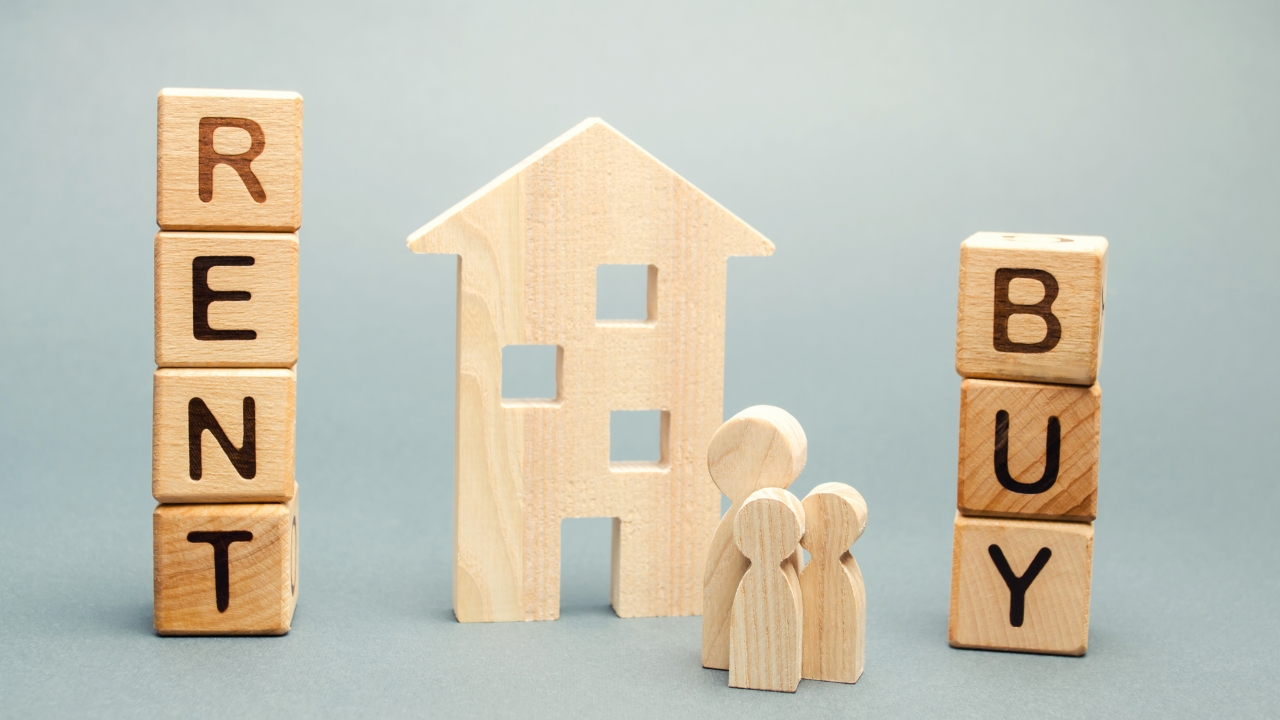
Renting or buying comes down to one main question: which option costs less each month?
Monthly numbers point clearly toward renting in most cases. Renting a starter home is cheaper than buying in all 50 major U.S. metros reviewed in March 2026 data. Average rent sits at $1,669, while average monthly starter-home ownership cost sits at $2,589.
Buying costs about $920 more per month on average. That means buying is about 55.1% more expensive each month than renting.
Buying may still make sense for people who plan to stay in one place for several years, have enough cash for upfront costs, and want to build equity over time.
A fair rent-versus-buy comparison should look at total monthly ownership cost, not just a mortgage payment.
Let us check it out.
2026 Rent vs. Buy Market Snapshot

In 2026, rent has eased slightly, while ownership costs are still much higher than typical rent payments for starter homes.
March marked the 32nd straight month of year-over-year rent declines for 0 to 2-bedroom rentals in the 50 largest U.S. metros. Median asking rent across those metros was $1,669, which was $25 lower than one year earlier. That equals a 1.5% annual decline.
Rent is still much higher than it was before the pandemic. March rent was $249 higher than March 2019, equal to a 17.5% increase.
Rent declines appeared across all major unit sizes:
Unit Type
Median Rent
Year-Over-Year Change
Studio
$1,410
Down 0.7%
One-bedroom
$1,563
Down 1.1%
Two-bedroom
$1,859
Down 1.7%
Buying a starter home carried an average monthly cost of $2,589. Compared with the median rent of $1,669, renters saved an average of $920 per month.
Buying costs about 55.1% more per month than renting. That gap shows why renting is still the cheaper monthly option in most large metros.
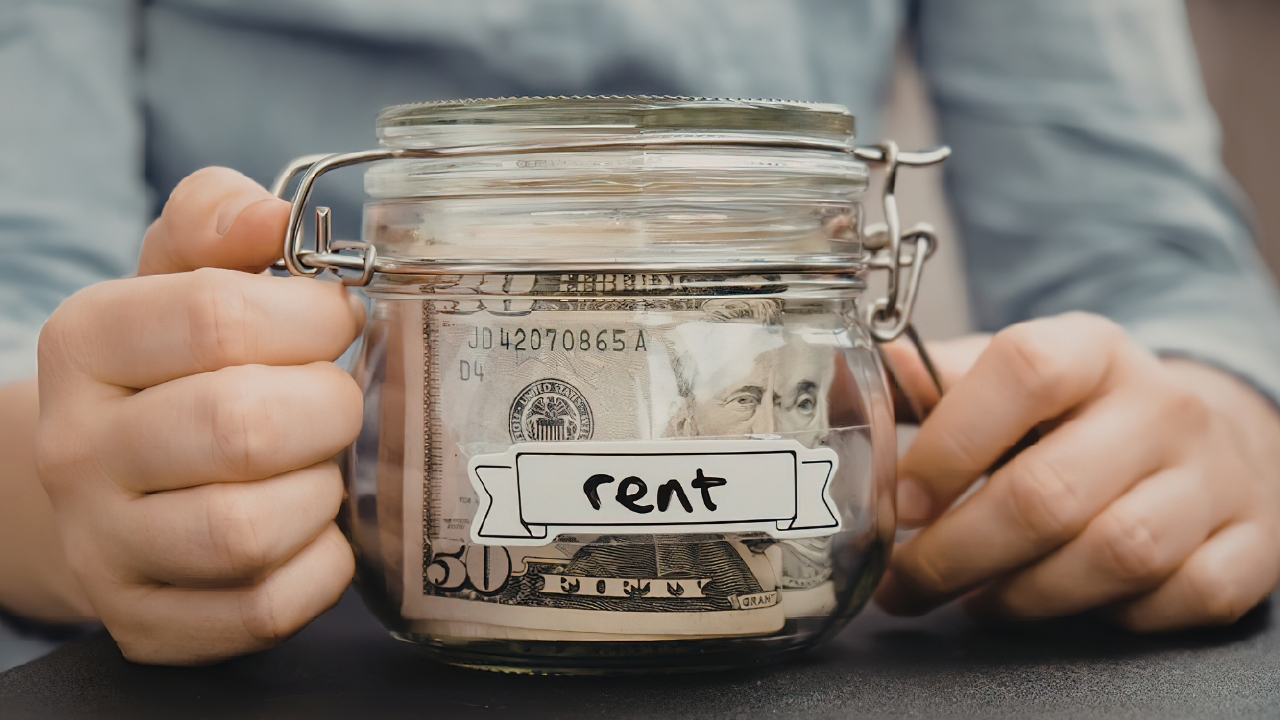
Lower buying costs helped shrink the gap. Average monthly buy cost fell to $2,589 in March, compared with $2,751 in March 2025. A decline in the 30-year fixed mortgage rate also played a role, moving to 6.18% compared with 6.65% one year earlier. Monthly rent and monthly homeownership costs are not equal categories. Rent is usually a simpler monthly number, while buying includes several ongoing expenses that can push total ownership cost far above the mortgage payment alone. A strong comparison should include every recurring cost that affects monthly cash flow. For renters, that means rent plus routine add-ons. For buyers, that means mortgage costs plus taxes, insurance, fees, and upkeep. Renting usually has fewer monthly cost categories than buying, but renters still need to count more than the base rent. A lease payment may be the highest cost, but it is rarely the only one. Median asking rent across the 50 largest U.S. metros was $1,669 in March, according to Realtor. That figure gives a useful baseline for comparing typical rent against ownership cost. A higher-cost city example shows how rental expenses can stack up. A renter paying $2,800 per month may also pay about $25 to $60 per month for tenant insurance and about $160 per month for utilities. That brings the total rental cost to about $2,985 to $3,020 per month. Renting is usually easier to budget because major repairs are usually handled by the landlord. Renters do not usually pay directly for roof repairs, plumbing replacements, appliance breakdowns, property taxes, or homeowners’ insurance. A mortgage payment is only one part of the total bill, so focusing on principal and interest alone can make ownership look cheaper than it really is. Common ownership costs include mortgage principal and interest, property taxes, homeowners’ insurance, private mortgage insurance or mortgage insurance when needed, HOA fees, maintenance, and repairs. A full monthly buying cost should include more than the mortgage payment. Assumptions included a 9% down payment and a 30-year fixed mortgage rate. A high-cost city buying example shows how ownership can become much more expensive than renting. With a home price of $1,007,500, a buyer may need a $201,500 down payment and about $70,525 in closing costs. Total upfront cost in that case reaches about $272,025. Mortgage payment alone may be about $4,380 per month. After adding other ownership expenses, the total monthly ownership cost may land around $5,355 to $5,840 per month. High-cost coastal metros and tech-heavy cities show some of the widest gaps because home prices and borrowing costs can rise much faster than rents. Large monthly gaps appear most clearly in expensive metros: Austin has a lower rent level than several coastal markets, but it still has a very large buying premium. Buying a starter home there cost 126.3% more per month than renting, the largest percentage gap among these markets. For renters in these cities, monthly savings can be significant. Saving or investing that difference can make renting financially powerful, especially for people who are not ready to commit to a home purchase. A higher monthly payment may still be worth it for buyers who can stay long enough, absorb surprise costs, and benefit over time through equity growth. Buying may work well for people with a longer timeline and a strong financial footing. A buyer may benefit if they plan to stay in the home for several years, have enough savings for a down payment and closing costs, can afford maintenance and repairs, want more stability, and care about building long-term equity. In many U.S. markets, buying usually needs a 5 to 7-year holding period to outperform renting financially. In high-cost markets, the breakeven period can stretch past 10 years. Several markets have a much smaller rent-versus-buy gap: If current trends continue, buying could become more cost-effective in about 1.5 years in Pittsburgh, about 2 years in Memphis and Baltimore, about 3 years in Washington, DC, and about 4 years in Orlando. Buying can also offer non-monthly benefits. Owners may gain stable housing costs, more control over renovations, and possible equity growth. Those benefits matter most when the buyer can stay long enough to offset upfront costs and market risk. The monthly comparison should start with rent versus the full monthly ownership cost. Rent may look cheaper than a mortgage payment, but that is not the complete comparison. A buyer also needs to include: Renting usually requires a security deposit and possibly the first month’s rent. Buying can require: Timeline is one of the biggest deciding factors. Shorter stays tend to favor renting because buying and selling costs can erase any equity gains. Longer stays can make buying more attractive. Local pricing matters too. Some cities show a huge rent advantage, while others are closer to breakeven. National averages are useful, but local rent, home price, tax, insurance, and HOA costs can change the answer. Savings discipline can change the long-term result. Renting only creates a financial advantage if the renter saves or invests the monthly difference. A renter saving the average $920 monthly difference could build meaningful cash reserves over time. Average rent across the 50 largest U.S. metros was $1,669 in March, while average monthly starter-home ownership cost was $2,589. Buying costs about $920 more per month on average, making ownership about 55.1% more expensive each month than renting. Renting has the strongest advantage in expensive markets such as San Jose, Los Angeles, San Francisco, Seattle, and Austin. In those cities, renters can save well over $1,700 per month compared with buying. Buying is more expensive upfront and month to month, but it can still make sense for people with stable income, enough savings, a longer timeline, and a desire to build equity. My name is Barbara Novak, I am a journalist focused on economic, religious, popular culture, and demographic trends shaping the United States. Professional life has been built around careful reporting, long term pattern analysis, and close attention to social forces that influence policy, culture, and public discourse. Work currently appears on usacli.org, where reporting centers on national data, institutional change, faith-based movements, pop culture, population shifts, and economic behavior. Writing emphasizes clarity, verification, and balance, with a strong commitment to primary sources, expert interviews, and historical records. Coverage often connects economic indicators with social behavior, showing how financial pressure, migration patterns, and belief systems interact over time. Religious reporting examines church affiliation, civic engagement, and moral frameworks without advocacy, allowing facts and context to guide conclusions.
Monthly Cost Breakdown
Renting Costs
Buying Costs
Where Renting Saves the Most
Metro
Median Rent
Monthly Buy Cost
Monthly Savings
San Jose
$3,276
$5,701
$2,425
Los Angeles
$2,760
$4,986
$2,226
San Francisco
$2,691
$4,829
$2,138
Seattle
$1,862
$3,882
$2,020
Austin
$1,361
$3,080
$1,719
When Buying May Still Make Sense
Metro
Extra Monthly Cost
Pittsburgh
$64
Memphis
$190
Baltimore
$206
Orlando
$303
Key Factors to Compare Before Deciding
A rent-versus-buy decision should start with monthly affordability, but it should not stop there. Upfront cash, plans, local pricing, and savings habits can all make a better choice.
FAQs
Summary